Insulation materials compared
Most residential insulation falls into a few families. They differ in form, how they are installed, and how well they handle moisture and irregular cavities — not only in their resistance to heat flow.
The common families
Fibreglass batt
Pre-cut blankets sized to fit between standard framing. Batts are widely available and straightforward to install in open, regular cavities. Their performance depends heavily on a tidy fit: compressed or gapped batts leave paths for heat to bypass them.
Mineral wool
Made from stone or slag fibres, also supplied as batts. It is denser than fibreglass, holds its shape, and is non-combustible. It is sometimes chosen where fire resistance or sound dampening is a consideration in addition to thermal performance.
Blown cellulose
Recycled paper fibre treated for fire and pest resistance, blown loose into attics or dense-packed into cavities. Because it is blown in, it can settle around obstructions and fill spaces that rigid batts leave open.
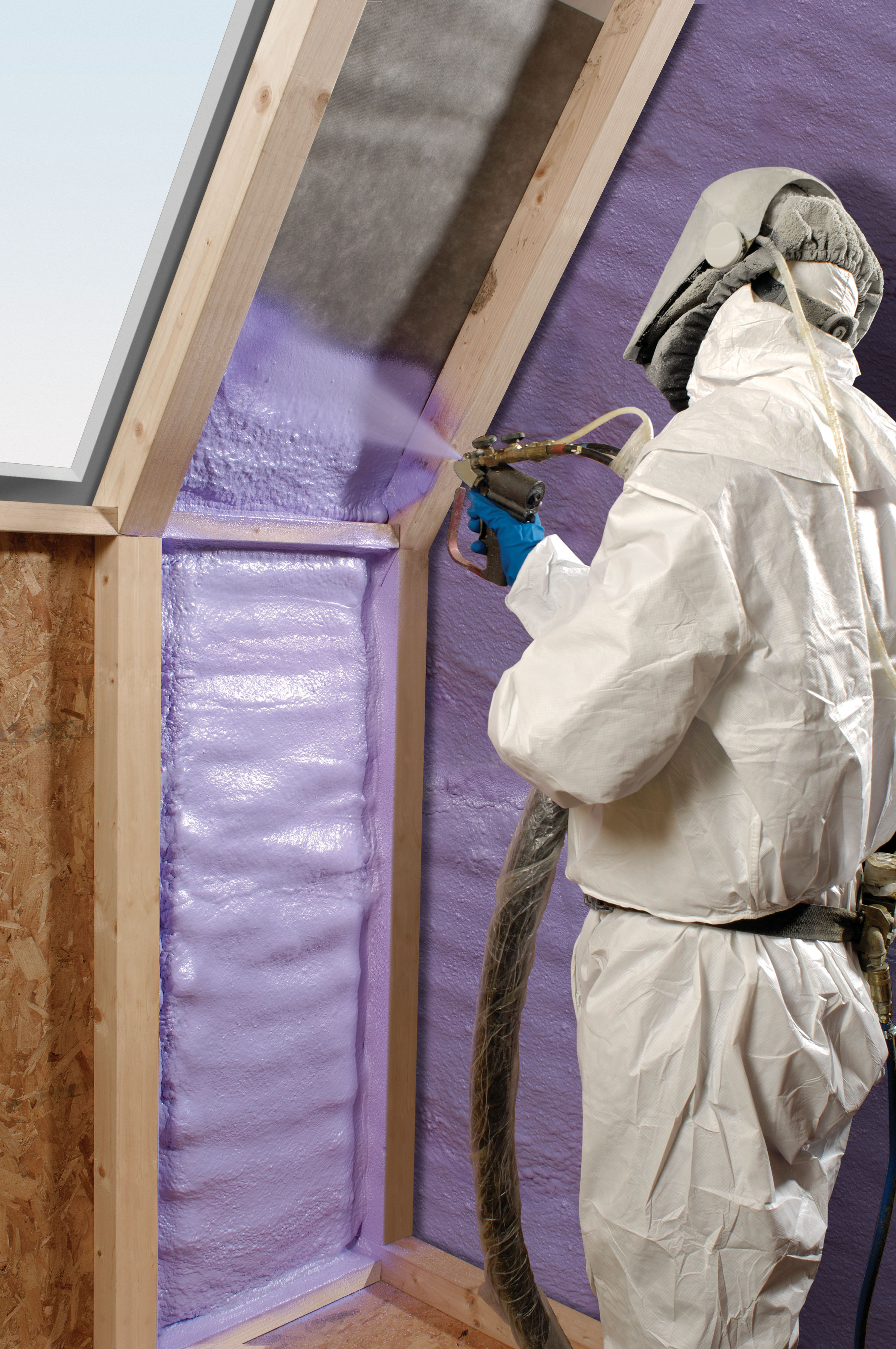
Spray polyurethane foam
Applied as a liquid that expands and cures in place. It can both insulate and, depending on type and thickness, act as an air barrier. It fills irregular gaps well, but installation is exacting and is usually done by trained installers.
Side by side
| Material | Form | Fills irregular gaps | Acts as air barrier |
|---|---|---|---|
| Fibreglass batt | Pre-cut blanket | Limited | No |
| Mineral wool | Dense batt | Limited | No |
| Blown cellulose | Loose / dense-pack | Yes | Partial when dense-packed |
| Spray foam | Applied liquid | Yes | Yes (some types) |
R-value is per inch, not per product. Materials are often quoted as resistance per unit thickness. A material with a higher value per inch still has to be installed at adequate thickness and without gaps to reach a target for the whole assembly.
Where each tends to fit
- Open attics: blown cellulose or fibreglass spread across the ceiling plane is common because the area is large and accessible.
- Standard wall cavities: batts are the usual default in new framing where cavities are regular.
- Rim joists and irregular gaps: spray foam is often used where shapes are awkward and air sealing matters.
- Fire or sound concerns: mineral wool is sometimes selected for its density and non-combustibility.
Moisture and detailing. In cold climates the position of air and vapour control layers affects whether an assembly stays dry. Material choice is only part of the picture; how the assembly is detailed matters as much, which is why complex retrofits are often reviewed by a building professional.